(Taken from the new issue of Left Tribune)
Labour’s performance in May’s General Election has led to a period of intense reflection and debate within the party and society at large. But, as Paul Dillon & Dermot Looney argue, too much of this debate has been filtered by a narrow media agenda and a false ‘modernisation’ model along the lines of Britain’s New Labour.
We’ve had several TV news reports, numerous radio phone-in shows and more blog postings than you can point a mouse at. There’s been more newspaper opinion pieces than there are opinions and the letters haven’t piled up in Irish media outlets since the days of Arthur’s Mailbag. For once, people are talking about the Labour Party. But the reason for such reflection is hardly a cause for celebration for Labour.
The immediate positives of May’s election outcome are few and far between. Yes, Labour has secured its position as the dominant party on the Irish left - such as that is. But the weak performance of Sinn Féin, the Socialist Party (now left without Dáil representation) and other left independents is nothing for Labour to cheer about. With a mollified Green Party firmly ensconced in Government, the hopes for a progressive bloc in parliament - whatever the arguments about the status of other groups in such an arrangement - are severely curtailed.
It is also worth recalling that the loss of broad left seats, or failure for these groups to gain them, was in almost all cases to the benefit of Fianna Fáil and Fine Gael - not Labour. So while some in the media have been quick to highlight Labour’s advantage over Sinn Féin and others as a positive for the party, realists and dreamers alike in Labour take no solace in an effective return
to the ‘bad old days’ of a two-and-a-half party system. Labour might very well be in a better
position now to recruit new members and attract new voters but it is a largely Phyrric victory.
Those attempting to be positive about the 20 seat, 10% outcome also point out the election
of young candidates to the Dáil such as Seán Sherlock in Cork East, Joanna Tuffy in Dublin Mid-West and Ciarán Lynch in Cork South-Central, along with a host of new and mostly younger Senators. But while these parliamentarians fought excellent campaigns and may have a bright political future ahead of them, it would be fair to note that their collective commentary in the aftermath of the election - and in particular following the departure of Pat Rabbitte as Party Leader - was hardly inspirational.
In various interviews and articles Labour’s newcomers made largely dull and often vacuous
statements about ‘modernising’ in a ‘changing Ireland’ where ‘all sections of society’ must be represented. It may be a little unfair to single out these candidates - after all, the party’s management, leadership and chatterers were as one on this - but the musings of one ‘newcomer’ in the Sunday Business Post that there may well indeed be “a place” for trade unions in modern society was the ultimate in kowtowing to the media consensus.
Commentators were also keen to point out Labour’s joy at the demise of the Progressive Democrats - hardly an achievement, given all their main policies are now cornerstones of Fianna Fáil governance, and sometimes, as in the case with the conduct of recent deportations, are carried out with even less humanity. And some have even alluded to the failure of the ‘Mullingar Accord’ strategy as a positive - not because Labour now stands independent from Fine Gael, but because they want Labour pushed closer to Fianna Fáil!
Any fair analysis of Labour’s ‘performance’ - if such a word is apt - must be cognisant of the
bleak reality we face as a party. Nearly 100 years in existence, Labour has been in seven
governments but has yet to achieve power. Rarely has the Labour Party had a chance to break out of its status as a half-party in Dáilterms; when that chance has arisen, as it did after Fine Gael’s disastrous result in 2002, Labour has tended to take options which prop up either of the two major parties.
For now, Labour’s Dáil proportion is a quarter of Fianna Fáil’s and two-fifth’s of Fine Gael’s. The need for renewal in terms of election candidates is plain to see. Doubtless, issues of organisation, strategy, policy, ideology and politics are crucial to how Labour goes forward. Such debates could have formed the foundations of a party-wide debate had there been a challenge to Eamon
Gilmore’s campaign to become Labour leader. But the lack of such a campaign should not mean the end of a member-led discourse on Labour’s role in the coming years.
While Michael D Higgins’ speech to the Tom Johnson Summer School was of much more substance, the soundbite from then-Party Leader Pat Rabbitte that Labour would have to "modernise" if it were to increase its electoral strength attracted much more attention.
The analysis that Labour can be restored to good health through "modernisation" draws on the experience of New Labour in Britain. Tony Blair declared New Labour to be a project of "modernisation" from the outset.
Exponents of Irish Blairism, small in number though they may be, have urged a re-examination
of Labour’s relationship with the Trade Unions. Some have suggested that Labour’s relationship with the union movement is damaging the party. The first problem with this contention is that it is not mindful of Labour history. The Labour-Union link has been a source of both political legitimacy and finance in troubled times for our Labour Party. The trade union link was often the only thing that bound the Party’s independently minded TD’s together in its early decades.
The argument also ignores contemporary evidence. Irish Congress of Trade Unions statistics
show that about half of all workers in Ireland are members of unions. Research indicates that workers in Ireland continue to see unions as relevant and important. There are votes in appearing union friendly, as Bertie Ahern well knows.
The Irish Labour Party has already looked for inspiration from New Labour - and has been
rebuked by the electorate. Much of the Labour platform at the recent election had echoes of the New Labour approach. Some of the party's main slogans, such as "Ireland can do better with Labour" were adapted from those recently used by New Labour.
The departure in tax policy- where Pat Rabbitte promised a 2% cut in the basic rate of tax - could be said to have emerged from the same school of thinking. The New Labour school of thought is that you undercut your rivals by offering the electorate the same policies as they do, holding your core support and wining over new voters in the process.
The only effect this tax proposal had was to ensure that the agenda of tax cutting in Ireland was intensified, as the proposal to cut the basic rate to 18% per cent was quickly matched & outstripped by the other parties. The spindoctors in our Labour Party have even gone as far as to borrow the term used by the New Labour to address the electorate - "Hard working families." How many people define themselves as, or as part of, such a unit? Focus groups may like notions of family and hard work but such assertion does not necessarily produce results in terms of fostering political identity or support.
Much of the New Labour miracle is a mirage in any case. The idea that New Labour represents
modernisation is itself nonsense. The actual politics of modernisation in that party - welfare cuts, tax cuts for the rich, privatisation - represent a throwback to a bygone era when the free market reigned supreme.
It is also worth noting that the supposed electoral miracle of New Labour ought to be called into question. That party received fewer votes in the last general election than it did when Michael Foot was leader in the 1983 election. Hundreds of thousands of disaffected voters who once opted for Labour now stay away from the polls altogether.
Those who argue that the Irish Labour Party can copy New Labour and shift to what is apparently the "centre ground" ought to take a sober look at the Irish political landscape before recommending such a course. This space is already very crowded and some very obvious questions arise.
What is the point, and where is the benefit, in Labour offering the electorate a political option already being presented by the two main political parties? Who would vote for Labour if what it offers is the same as what is offered by Fianna Fail and Fine Gael? Surely these parties can implement centre-right policies better than Labour?
The debate about Labour future ought to be “no holds barred." All aspects of policy and politics should be examined as we attempt to chart a future for our party. But we ought to be weary of dead ends. Continuing to employ the politics of supposed "modernisation" or the approach of New Labour is only likely to inflict further damage on our Labour Party.
Tuesday, 11 September 2007
Friday, 20 July 2007
Tom Johnson Report
R ather than write a report of the Tom Johnson Summer School (see below) I am just going to be very lazy and copy the excellent but slightly dubious report of my friend and comrade Paul Dillon from the Labour message boards. The dubious parts are the seating arrangements; yours truly sat beside Pat Rabbitte for the dinner; it was almost enough to put me off my soup and chicken (no smoked salmon here!).
Apparently I was due to blog the event according to labour.ie. That was the first I had heard of it but attempts to make some quick posts ended with a firewall in the hostel we were kipping in.
I was employed as the photographer for the weekend and some of the pics of the are up on flickr . Speeches by Michael D Higgins (superb), Pat Rabbitte (trite) and Mark Langhammer (fascinating), amongst others, are up on labour.ie which you can access via the press archives.
-----------
 Report by Paul Dillon
This years Tom Johnson school was an exciting, stimulating, and sometimes stormy event.
The school was well attended and all sections of opinion within the Labour Party were represented. I have written this short report for the benefit of those who could not attend and to remind those who did of the various debates and discussions that took place. I am aware that a video diary of Tom Johnson 2007 will be available in due course.
Tom Costello-Major of Galway-opened the school, calling for a political debate focusing on values. Labour Youths Pat Nulty kicked off the debate with a stirring speech in which he reminded the attendees that Labour youths analysis of the political situation had been proven right by the results of the general election. He argued that the challenge now was to build not just an alternative government, but an alternative politics. The contribution of Councillor Eric Byrne contained a similarly ambitious political approach. He argued that the pursuit if a left led government was the approach most likely to yield results for Labour.
 Agreeing with many of the sentiments of Byrne and Nulty, Jan O'Suillivan TD argued that the debate on the Mullingar accord ought to be put to rest and Labour needed to enter into a new era without carrying the baggage of the past. In a theme that was to become familiar over the weekend, she called for an examination of how Ireland was changing, and mentioned the David McWilliams analysis of a different understanding of Ireland’s class structure.
The liveliest contributions came from the floor. Pat Hardiman from the Galway West constituency called for a re-examination of trade unionism and social partnership.” He insisted that Labour “should reconnect with those on low incomes”. Veteran Labour activist and Labour N.E.C member Henry Haughton was typically up font and honest in his contribution. He argued that spin was damaging the party’s integrity and its democracy. He insisted that Labours challenge was not to seek out the floating vote, but to build up a core vote. Henry also mentioned the proposals to dismiss full time staff members from the pay roll at head office. Dismissing Haughton’s contribution, Jan O’Sullivan argued that “Henry will be Henry”.
 The Saturday morning session-Class, the Celtic Tiger and the Labour party-was a source of controversy, as members of the panel and members of the audience clashed on a number of political questions. Joanna Tuffy kicked off the debate with a contribution about her experience as a candidate in the general election. Paul O’Shea outlined some of the conditions that prevail in the Moy Ross community, and argued for more focus on the implementation of measures to combat poverty and inequality.
 There was little common ground in the contributions of Kieran Allen and David Begg. Allen called for an end to Social Partnership. Begg defended the partnership model. Begg’s vision was Social Democratic in tone, and he argued for the implementation of the “Nordic model” in Ireland. Allen had no truck with such timidity, insisting that the way forward lay in broad movements and class politics.
Desmond O’Toole from Dublin Mid West argued from the floor that Allen’s Trotskyite vision was outdated and brought him back to his youth when he was active in the British Labour party.
 Michael D Higgins TD made a keynote address on Saturday afternoon. In a wide ranging and thought provoking speech, he called for critical friendship with other groups on the left and for a concerted challenge to what he termed were the “hegemonic myths” that were dominant in the current period.
Labour Left argued the following in 1986: “Raise the national question in a party meeting and people will run away, form a hundred splits or launch into platitudes” (Realignment in Irish Politics, 1986). However, Labour members in 2007 are keen to take on the question of the North, as was evidenced by the large crowd in attendance for the debate titled “Which way forward for the left in Northern Ireland?”. Mark Langhammer of the Northern Ireland Labour forum, Sean Mitchell of the People before Profit alliance in West Belfast and Tommy Broughan TD all made contributions from the podium.
The debate soon polarised on the question of whether or not Labour should endorse candidates to run next time out in Northern Ireland’s local elections. Labour members will get their say on this issue at the next party conference.
The annual Tom Johnson dinner is always an interesting event. The seating arrangements can be most insightful. The top table is always filled with the members most loyal to the party leader, and dissenters are always put sitting at the back where their heckles will not be heard. This year was no exception in this regard. Pat Rabbitte made his annual leaders speech to the school after the dinner. He argued for an examination of the “Labour Party brand”. There was a warm welcome for Larry Wheelock from the justice for Terence Wheelock campaign, who was presented with this years Jim Kemmy award.

The debate on “Migration on the left” was vigorously contested by those in attendance. Ciaran Lynch TD from Cork clashed with members of the audience over Labours approach to immigration. There was a debate over Labour participation in the campaign to defeat McDowells citizenship referendum. Dermot Looney was amongst those to defend Labour participation in the campaign. There was something of an urban-rural divide in evidence during this debate. Cork activist Hazel Nolan argued that immigration was coming up on the doorsteps, while Dublin based activists argued otherwise.
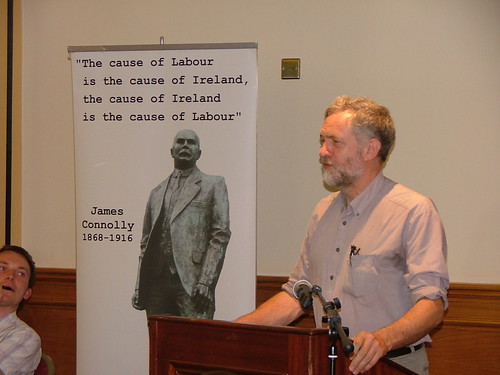
 Tom Johnson 2007 concluded with a debate on 21st Century Socialism. British Labour MP Jeremy Corbyn made the key speech on the question. He argued for an internationalist approach and spoke at length about the crisis in Palestine, as well as re-stating the case against the Iraq war.
 ather than write a report of the Tom Johnson Summer School (see below) I am just going to be very lazy and copy the excellent but slightly dubious report of my friend and comrade Paul Dillon from the Labour message boards. The dubious parts are the seating arrangements; yours truly sat beside Pat Rabbitte for the dinner; it was almost enough to put me off my soup and chicken (no smoked salmon here!).
Apparently I was due to blog the event according to labour.ie. That was the first I had heard of it but attempts to make some quick posts ended with a firewall in the hostel we were kipping in.
I was employed as the photographer for the weekend and some of the pics of the are up on flickr . Speeches by Michael D Higgins (superb), Pat Rabbitte (trite) and Mark Langhammer (fascinating), amongst others, are up on labour.ie which you can access via the press archives.
-----------
 Report by Paul Dillon
This years Tom Johnson school was an exciting, stimulating, and sometimes stormy event.
The school was well attended and all sections of opinion within the Labour Party were represented. I have written this short report for the benefit of those who could not attend and to remind those who did of the various debates and discussions that took place. I am aware that a video diary of Tom Johnson 2007 will be available in due course.
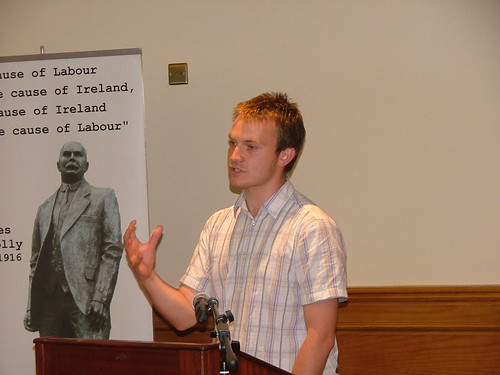
Tom Costello-Major of Galway-opened the school, calling for a political debate focusing on values. Labour Youths Pat Nulty kicked off the debate with a stirring speech in which he reminded the attendees that Labour youths analysis of the political situation had been proven right by the results of the general election. He argued that the challenge now was to build not just an alternative government, but an alternative politics. The contribution of Councillor Eric Byrne contained a similarly ambitious political approach. He argued that the pursuit if a left led government was the approach most likely to yield results for Labour.
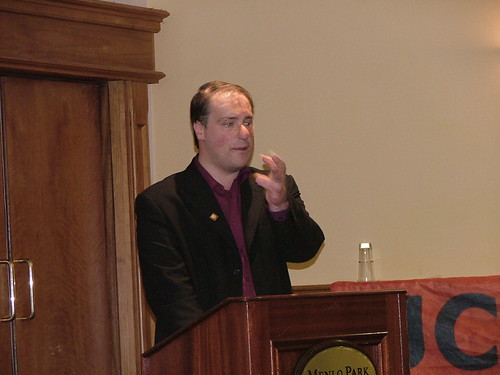 Agreeing with many of the sentiments of Byrne and Nulty, Jan O'Suillivan TD argued that the debate on the Mullingar accord ought to be put to rest and Labour needed to enter into a new era without carrying the baggage of the past. In a theme that was to become familiar over the weekend, she called for an examination of how Ireland was changing, and mentioned the David McWilliams analysis of a different understanding of Ireland’s class structure.
The liveliest contributions came from the floor. Pat Hardiman from the Galway West constituency called for a re-examination of trade unionism and social partnership.” He insisted that Labour “should reconnect with those on low incomes”. Veteran Labour activist and Labour N.E.C member Henry Haughton was typically up font and honest in his contribution. He argued that spin was damaging the party’s integrity and its democracy. He insisted that Labours challenge was not to seek out the floating vote, but to build up a core vote. Henry also mentioned the proposals to dismiss full time staff members from the pay roll at head office. Dismissing Haughton’s contribution, Jan O’Sullivan argued that “Henry will be Henry”.
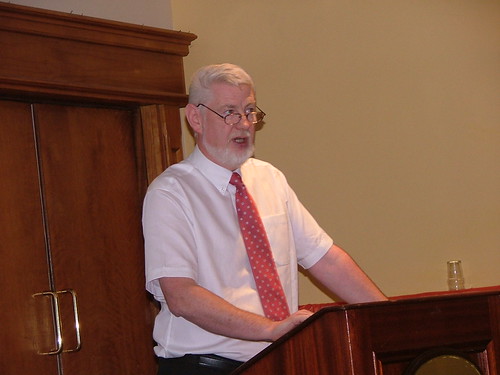 The Saturday morning session-Class, the Celtic Tiger and the Labour party-was a source of controversy, as members of the panel and members of the audience clashed on a number of political questions. Joanna Tuffy kicked off the debate with a contribution about her experience as a candidate in the general election. Paul O’Shea outlined some of the conditions that prevail in the Moy Ross community, and argued for more focus on the implementation of measures to combat poverty and inequality.
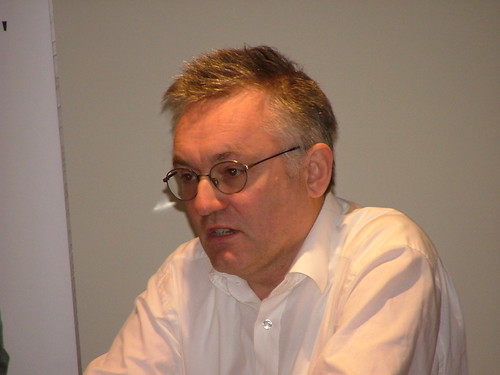 There was little common ground in the contributions of Kieran Allen and David Begg. Allen called for an end to Social Partnership. Begg defended the partnership model. Begg’s vision was Social Democratic in tone, and he argued for the implementation of the “Nordic model” in Ireland. Allen had no truck with such timidity, insisting that the way forward lay in broad movements and class politics.
Desmond O’Toole from Dublin Mid West argued from the floor that Allen’s Trotskyite vision was outdated and brought him back to his youth when he was active in the British Labour party.
 Michael D Higgins TD made a keynote address on Saturday afternoon. In a wide ranging and thought provoking speech, he called for critical friendship with other groups on the left and for a concerted challenge to what he termed were the “hegemonic myths” that were dominant in the current period.
Labour Left argued the following in 1986: “Raise the national question in a party meeting and people will run away, form a hundred splits or launch into platitudes” (Realignment in Irish Politics, 1986). However, Labour members in 2007 are keen to take on the question of the North, as was evidenced by the large crowd in attendance for the debate titled “Which way forward for the left in Northern Ireland?”. Mark Langhammer of the Northern Ireland Labour forum, Sean Mitchell of the People before Profit alliance in West Belfast and Tommy Broughan TD all made contributions from the podium.
The debate soon polarised on the question of whether or not Labour should endorse candidates to run next time out in Northern Ireland’s local elections. Labour members will get their say on this issue at the next party conference.
The annual Tom Johnson dinner is always an interesting event. The seating arrangements can be most insightful. The top table is always filled with the members most loyal to the party leader, and dissenters are always put sitting at the back where their heckles will not be heard. This year was no exception in this regard. Pat Rabbitte made his annual leaders speech to the school after the dinner. He argued for an examination of the “Labour Party brand”. There was a warm welcome for Larry Wheelock from the justice for Terence Wheelock campaign, who was presented with this years Jim Kemmy award.

The debate on “Migration on the left” was vigorously contested by those in attendance. Ciaran Lynch TD from Cork clashed with members of the audience over Labours approach to immigration. There was a debate over Labour participation in the campaign to defeat McDowells citizenship referendum. Dermot Looney was amongst those to defend Labour participation in the campaign. There was something of an urban-rural divide in evidence during this debate. Cork activist Hazel Nolan argued that immigration was coming up on the doorsteps, while Dublin based activists argued otherwise.
 Tom Johnson 2007 concluded with a debate on 21st Century Socialism. British Labour MP Jeremy Corbyn made the key speech on the question. He argued for an internationalist approach and spoke at length about the crisis in Palestine, as well as re-stating the case against the Iraq war.


Wednesday, 18 July 2007
More on Labour Youth and Coalition (and Electoral Strategy)
A couple of people have been onto me asking more about Labour Youth's position on strategy and coalition. So thanks to Andrew Payne I've managed to recover a copy of Labour: Towards an Alternative Politics - the discussion document on electoral strategy written in advance of the 2005 Tralee Conference where the "Mullingar Accord" strategy was up for decision. The document was based on Labour Youth's own Conference resolutions on coalition and strategy and was written by myself and Patrick Nulty (current LY Chair). It was distributed in Tralee along with a similar but separate document written by the ATGWU but to little avail.
I also spoke on the motion (check out the 'Dodgy Sideburns' pic on the bottom of the left column) but history records it as a victory for the Mullingar Accord strategy which played a significant role in the election just gone. Clearly, as Labour moves forward, the questions raised in this document regarding this strategy are as pertinent now as in May 05.
------------------------
I also spoke on the motion (check out the 'Dodgy Sideburns' pic on the bottom of the left column) but history records it as a victory for the Mullingar Accord strategy which played a significant role in the election just gone. Clearly, as Labour moves forward, the questions raised in this document regarding this strategy are as pertinent now as in May 05.
------------------------
LABOUR:
Towards an Alternative Politics
THE PROGRESSIVE CASE AGAINST THE MULLINGAR ACCORD
Discussion Document
For distribution at the 2005 Labour Party Conference
--------------------
INTRODUCTION
Labour Youth is the active, campaigning youth section of the Labour Party which organises and represents party members between 16 and 26. Labour Youth activists are heavily involved at branch, constituency and national level within the Labour Party; they are also involved at a youth level in running campaigns, making policies and fighting for change in colleges and local communities across
This document argues the progressive case against an electoral strategy based around the ‘Mullingar Accord,’ a pact between Labour and Fine Gael on Westmeath County Council. The launch of the Accord in September 2004 was overshadowed by the unveiling to the press of a pledge by Labour Party leader, Pat Rabbitte, and Fine Gael leader, Enda Kenny, to work together to form the basis of an alternative government. The ‘Mullingar Accord’ has hence become a byword for the proposed new electoral strategy between Fine Gael and Labour.
This document arises out of a motion passed at the 2004 Labour Youth Conference, held last November in the Mansion House,
The 2005 Conference of the Labour Party gives Labour Youth a chance to put forward an alternative electoral strategy to that proposed along with the Mullingar Accord. This discussion document does not reflect the individual views of all Labour Youth activists. Rather, it seeks to summarise a particular outlook on the forthcoming general election within a long-term analytical framework which will best achieve our fundamental goals of equality, freedom, democracy and community. We believe this strategy is shared by many within the Labour Party and that it is a one that can win, not only at this Conference, but at the next general election and beyond.
We do not believe the Labour Party should enter into any pacts with Fianna Fáil or the Progressive Democrats. We should offer a real alternative to the self-serving, right-wing policies of the current government. We do not, however, believe that Labour should thus enter into an electoral pact with Fine Gael in order to oust the current government.
We do not believe a minority status for the Labour Party in a Fine Gael-led government after the next election is realistic, given the massive differences in policy and ideology between the parties. Any such pact would require a substantial and objectionable compromise of our values.
We do not believe minority status for the Labour Party is desirable, given the nature of previous such governments, the compromises made to Fine Gael, and the subsequent losses accruing to Labour in terms of electoral strength and reputation.
We believe that the Labour Party should stand as an independent party at the next election, ruling out any coalition with Fianna Fáil and the PD’s and pushing our agenda as the leading party of government. We believe the best way to achieving our values and policies is through a Labour-led government.
We believe in a bold and historic electoral strategy for Labour – one which pushes Pat Rabbitte as the next Taoiseach, one which pushes our policies and one which pushes our candidates across
Our strategy offers more than an alternative government. It offers an alternative politics.
This document will outline the failures of the past, the inadequacies of the current proposals, and the potential of the future for Labour. Coalitions and electoral strategy have dogged this party for decades. We believe it is time for a real groundshift in Irish politics, one in which a historically-weak Labour Party can emerge triumphant with our core values intact.
-----------------------------------
AN ALTERNATIVE POLITICS
At National Conference this year delegates are being asked to vote on a number of motions relating to our electoral strategy in the upcoming general election. These decisions are critical in determining what direction our party will take over the next few years. Labour Youth proposes in this document an alternative to the two commonly-held paradigms of Labour electoral strategy; ‘pro-Fine Gael’ and ‘pro-Fianna Fáil.’
We believe that the main motion proposed by the National Executive Council should be defeated – but for particular reasons. We disagree with those who oppose a pact with Fine Gael because they favour government with Fianna Fail. Labour Youth is concerned at those pushing a pro-FF agenda under a supposedly “Labour First” line and calls for a strategy that rules out any coalition with Fianna Fáil and the Progressive Democrats from the outset.
Furthermore, we reject the isolationist anti-coalition politics that damaged Labour in the past. Given the nature of our electoral system, coalition government is a necessity – but for a successful Labour Party, so too is an end to 'civil war' politics. For this reason, our electoral strategy will see Labour presented as a leading party of government, not as an ancillary to Fine Gael or Fianna Fáil.
Only when Labour casts away its age-old inferiority complex can we emerge as the major player in Irish politics, capable of truly implementing our policies and engendering a society based on community, freedom, democracy and equality, in which social justice and economic well-being for all are prioritised above all else.
For years political scientists and commentators have noted
We believe that Labour can best close the gap, achieving its policies and aims, as part of a progressive government. Realistically, in the short-term, this means coalition. But in approaching the issue of coalition government, Labour needs to analyse not only the short-term consequences of such a decision, but whether Labour and
Minority coalition status in which Labour is subservient to either Fianna Fáil or Fine Gael has been damaging to our party in the past (see the following table). These bare statistics show that in five of the six occasions in which Labour entered government, its overall seat total was reduced immediately afterwards – on only one occasion, the short-lived 1981-82 Fine Gael-Labour coalition, did Labour even manage to hold onto its seats. For a party seeking to break out of its traditional third place in the pecking order, the falls in already-low numbers make for depressing reading.
Table 1: Labour Participation in Government and Subsequent Loss of Seats
Labour in GovtCoalition PartnersTotal Seats in Election Prior to GovtTotal Seats in Election Following GovtChange in seats
1948-51FG, Clann na Poblachta, Clann na Talmhan19 (including National Labour)16-3
1954-57FG, Clann na Talmhan1913-6
1973-77FG1917-2
1981-82FG15150
1982-87FG1612-4
1993-97FF 1993-94,FG & DL 1994-973317-16
It is our contention that Labour will continue to suffer similar losses given the Catch-22 nature of minority ‘partnership’ in coalition. Any unpopular decisions or scandals in a possible coalition government in which Labour plays the minor role are likely to have a negative impact on Labour’s vote next time around, while popular initiatives and thus outcomes are more likely to be attributed to the larger party, the party of the Taoiseach – in the case of the Mullingar Accord, Fine Gael.
Our case for an alternative politics combines both electoral and coalition strategy. Our coalition strategy should be only to enter government when Labour has sufficient critical mass to put our values and policies at the heart of the agenda, i.e. a Labour-led government. Our connected electoral strategy must then focus on achieving such an aim.
To this end, we believe that Labour should contest the next general election as an independent party without any pre-election pacts or deals with other parties. Negotiations with other parties should take place after the general election after having tried to maximise support for Labour Party policy and candidates alone.
------------------------------
AN ALTERNATIVE GOVERNMENT?
The Mullingar Accord strategy will mean an electoral tie-in between our party and Fine Gael. But we believe that differences in ideology and policies make such a tie-in incongruous and pose enormous difficulties for a pre-election pact and any subsequent coalition. While a Special Delegate Conference of the Labour Party will decide on whether our party joins government following the next election, if such a deal has been negotiated on our behalf, no such provision will exist for any proposals that might form the basis of a pre-election pact.
As well as clear ideological differences, Labour and Fine Gael differ so fundamentally on specific policy issues that we believe make it impossible for us to legitimately ask our supporters to transfer to them. Some of them include:
1. Housing: The Labour Party is committed to a constitutional right to housing. Furthermore our Party strongly advocates regulation of the price of land for housing development. Fine Gael are firmly against both proposals.
2. Health: The Labour Party supports a universalist approach to healthcare with free GP care for all and compulsory health insurance for every citizen in the state, whereby the state pays the premiums for people on low income. Fine Gael are firmly against both proposals.
3. Civil Liberties: The Labour Party has opposed many aspects of the Criminal Justice Bill currently being proposed. In particular, our section of the party (Labour Youth) has launched a nationwide campaign against the bill. This is due to the serious threat to civil liberties posed therein. In contrast, Fine Gael have criticised the Bill for not being strong enough. This represents a clear difference between both parties’ respect and support for the protection of civil liberties.
4. Foreign Policy: Many Labour Party members strongly object to the continued use of Shannon airport by the
5. Local Government: In many local authorities across the country Labour Party public representatives are central in preserving local amenities, green belts and increased infrastructure for communities within development plans and other aspects of planning and development in local government. In many cases such proposals are resisted by both Fianna Fail and Fine Gael councillors who share a similar philosophy on such matters. In addition, both these parties have not supported the rights and needs of the Travelling community in
6. The Citizenship Referendum: The citizenship referendum that took place last year for many people was one of the most regressive, opportunistic and detrimental measures proposed by an Irish government in many years. Our party took a strong and principled stand against this referendum and campaigned against it. This contrasts sharply with Fine Gael who enthusiastically supported the constitutional amendment. Labour’s commitment to fairness for refugees and asylum-seekers is clear in the work of our Dáil spokesperson, the involvement of our members in anti-racist groups and our general commitment to equality and community – it is severely doubtful whether Fine Gael share similar policy bases.
While merely illustrative of a wider trend of policy differences, the six examples noted are in and of themselves reasons to question whether an adequate and reasonable compromise can be made in agreeing to an electoral pact with Fine Gael.
We believe our approach to electoral strategy should aim to see Labour as the second party in the State. A pre-election pact with Fine Gael undermines that ambition. Our Party Constitution states that we are a "Democratic Socialist Party," while in reality there are no major philosophical differences between the two largest parties at present. One must question whether it is acceptable for a party with our values to advocate our supporters transferring to a party we directly oppose ideologically. Within a European context both Labour and Fine Gael are members of political groupings diametrically opposed to each other (Christian Democrats and Socialists respectively).
It is also tactically questionable whether a strategy based on a FG-Labour electoral pact will achieve many gains for Labour in terms of electoral representation, if any at all. In many constituencies around the country Labour and Fine Gael are in direct competition for seats. Examples of this include Kerry North, Dublin West, Dublin Central, Dublin South and many more.
A formal pact would undoubtedly strengthen Fine Gael's position. It is not clear that a formal pact would strengthen Labour’s position at all. Certainly, one must ask whether a formal pact would lead to the kinds of Labour gains necessary for anything more than a bit-part role in the next government. It is not our intention to play the numbers game but it is abundantly clear that the proposed pact aims for a moderate increase in Labour seats – say by between 4 and 7 seats to a total between 25 and 28 – and a massive increase in Fine Gael representation aided by an on-the-day seat-bonus of up to 25 seats in order to increase their representation to the mid-late fifties.
The historical evidence suggests that Labour does better when it stands alone. It has by now been well-noted that Labour’s most successful elections – 1969 and 1992 in particular – have been characterized by independent strategies. In 2002 the Labour vote held up but common wisdom has it that Labour would have been better suited if it had ruled out coalition with Fianna Fáil.
We believe in modifying the independent Labour strategy for the upcoming election, ruling out any transfer arrangements but also ruling out any possibility of entry into coalition with Fianna Fáil or the PD’s. Labour always does best when it not only stands for an alternative government but also an alternative type of politics.
Two other relevant issues might briefly be mentioned here. Firstly, one might question the desire of Labour activists to partake in a lengthy campaign designed to see Fine Gael, its ideology, policies and personalities in power. A detrimental effect of such a strategy amongst many activists is at least probable.
Finally, given that so much of the deliberative debate occurs in the media, we must take into account the framing of the upcoming electoral campaign in terms of press and broadcasting emphasis. If Labour enters as a minority partner in a pact with Fine Gael, it is likely that the latter will receive far more coverage due to the oppositional framing so common in contemporary media.
In particular, Labour will be altogether sidelined by concentration on potential Taoisigh in the leaders of FG and FF if the proposed strategy is accepted. Our strategy would see Pat Rabbitte promoted as an alternative to the two other leaders, a scenario we believe will be ultimately beneficial to the Labour vote.
----------------------------
CONCLUSION
Our case for an alternative politics centres on the need to change the very nature of Labour’s position in Irish society. This document does not allow for a wide discussion on the various issues surrounding the possibilities for a Labour-led
The 2005 National Conference of the Labour Party will give hundreds of delegates an exciting chance to decide on the electoral strategy for the upcoming general election. We believe that delegates should make their decisions and cast their votes in line with a commitment to an alternative politics in which Labour no longer plays second fiddle to conservative parties in Fine Gael and Fianna Fáil.
Our analysis is based not on short-term targets but on long-term goals for Ireland, based on the key principles of our movement and on the need for Labour to assert itself as the dominant political force in the 21st century.
The key elements of our strategy are…
1.A rejection of coalition with Fianna Fáil or the PD’s;
2.An independent electoral platform free from any pacts with Fine Gael or any other party;
3.The presentation of Labour as a potential leading party of government, with the appropriate level of candidates and strategies to ensure maximum media coverage;
4.A strategy which from its outset points out that Labour will not enter as a minority partner into any post-election government with Fine Gael.
Only when Labour gains the critical mass it requires to ensure the radical change in society inherent in our core principles should be enter government. This critical mass is not sometime in the distant future, but is an achievable goal at the next general election, provided a strong, independent Labour campaign offers an alternative politics, not just an alternative government.
We ask all delegates to vote accordingly on motions 57-70, encompassing composites 5 and 6, this Saturday morning.
Monday, 18 June 2007
Where Next for Labour?
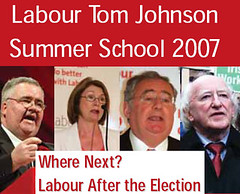
There has been a dearth of analysis within the Labour Party regarding the very disappointing outcome of the recent general election.
There have been some moderately interesting blog posts, some decent discussion on the Labour members message boards and the next issue of Left Tribune will focus on an analysis of the elections and the political situation moving forward.
But the most successful debates are those which engage a wide section of the party in a real setting. So the Tom Johnson Summer School, which will be held in Galway on the weekend of July 13-15, will be crucial in allowing members to build for the future.
Expect a lot more blogging, writing, reflection and keyboard wars. But the Summer School named after a particularly bogey Labour leader will play a significant role in determining the strategies and politics of Labour members in the future.
It will feature the most impressive lineup of speakers at any Tom Johnson School this millennium. TD's will include Michael D Higgins, Willie Penrose, Jan O'Sullivan, Eamon Gilmore, Joanna Tuffy, Tommy Broughan and Ciarán Lynch. There'll be Labour activists such as Cllr Eric Byrne, Paul O'Shea, Mark Langhammer, Benedicta Attoh and Paul Dillon involved in the debates, along with academics such as Stephen Loyal and Kieran Allen, David Begg of ICTU and Jeremy Corbyn MP of the Socialist Campaign Group in the British Labour Party. Importantly, there's a chance for members to lead the debate.
There have been few occasions when a deeper analysis has been required for Labour; booking details and further info are on the Labour Youth site
Wednesday, 16 May 2007
We don't want his support, but...
RTÉ is reporting that Tony Blair is set to feature in tonight's party political broadcast for Fianna Fáil along with Bill Clinton and George Mitchell. They will be commenting on the role played by Bertie Ahern in the peace process and were reportedly in agreement with their views being aired in a PPB for FF.
How utterly pathetic that Blair, not content with a huge shift to the right at home, is now backing the centre-right of Irish politics. Supposedly Labour in Britain are our sister party throught the PES and Socialist International. Of course we have many comrades (see my earlier posts on John McDonnell) but Blair is not one of them. I can't imagine how much in breach of PES rules it is to back a rival candidate over a sister party in another country's election, but it certainly goes against principles of fraternity and internationalism which supposedly underpin the left.
I wrote the mail below to the General Secretary of Brit Labour, let's see if they respond. Any replies will be posted here.
How utterly pathetic that Blair, not content with a huge shift to the right at home, is now backing the centre-right of Irish politics. Supposedly Labour in Britain are our sister party throught the PES and Socialist International. Of course we have many comrades (see my earlier posts on John McDonnell) but Blair is not one of them. I can't imagine how much in breach of PES rules it is to back a rival candidate over a sister party in another country's election, but it certainly goes against principles of fraternity and internationalism which supposedly underpin the left.
I wrote the mail below to the General Secretary of Brit Labour, let's see if they respond. Any replies will be posted here.
Dear Mr Watt,
I am writing to voice my disgust at the appearance of your Party Leader, Tony Blair, in a Party Political Broadcast for Ireland's Fianna Fáil party due to air this evening.
The decision of a Labour leader to publically back a centre-right party in this manner flies in the face of the principles of internationalism and fraternity we supposedly share as membersof the Party of European Socialists.
The historic link between our two parties has been severely damaged by this personalised intervention by your leader. Unless there is a retraction of Mr Blair's appearance in this video, I will be writing to the Party of European Socialists to ask them to take action against British Labour and working with my own party's representatives to do the same.
Yours in disgust,
Dermot Looney
Member, Irish Labour Party
Subscribe to:
Posts (Atom)